
469-742-9950
bp_logo_white469-742-9950

SI Joint Fusion

Get started on the path to functional pain relief!

Your Back Pain Might Not Be Coming From Your Back

Millions of people spend years treating lower back pain with medications, injections, physical therapy, and sometimes surgery—without lasting relief. For a significant number of them, the real problem is never the back itself.
It’s the sacroiliac joint.
SI joint dysfunction is one of the most commonly missed diagnoses in pain medicine. If you have been treated for back pain and are still hurting, your SI joint deserves a serious look.
Get an SI Joint Evaluation
Or Call Brock Pain Medicine: (469) 742-9950

What Is the SI Joint and Why Does It Cause Pain?
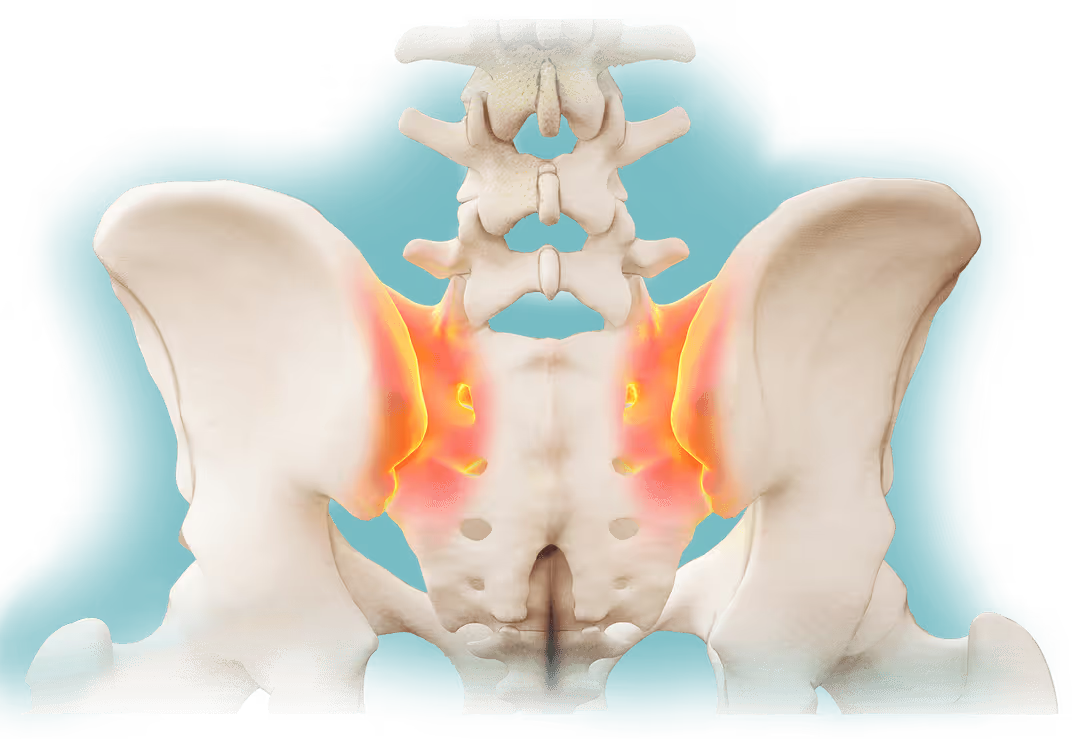
The sacroiliac joint connects the base of your spine to your pelvis on both sides of your lower back.
Its job is to transfer load between your upper body and your legs and absorb shock during walking, standing, and movement.
When the SI joint becomes inflamed, damaged, or hypermobile, it can generate significant pain that often feels like it’s coming from the lower back, hip, buttock, or even radiating down the leg.
Because the location and character of the pain overlap so heavily with other spinal conditions, SI joint dysfunction is frequently misattributed.
SI Joint Pain
Common Symptoms of SI Joint Dysfunction
Lower back pain, typically on one side
Pain in the hip, buttock, or pelvis that worsens with prolonged sitting or standing
Pain that radiates into the back of the thigh or groin
Discomfort or instability when moving from sitting to standing
Pain that is worse when climbing stairs, walking on uneven ground, or rolling over in bed
Pelvic pain, sometimes described as a deep ache
Get an SI Joint Evaluation

What Causes SI Joint Problems?

Trauma

A fall, car accident, or sudden injury can disrupt the SI joint’s alignment and stability, leading to persistent pain that may not resolve on its own.

Pregnancy

The hormone relaxin loosens ligaments throughout the pelvis in preparation for childbirth. This can cause SI joint hypermobility that persists after delivery.

Prior lumbar fusion

Up to 75% of patients who undergo lumbar spinal fusion develop SI joint degeneration within 5 years, as load is redistributed from the fused segment to the SI joint.

Degenerative sacroiliitis

Normal wear and tear over time can break down the cartilage lining the SI joint, causing progressive pain similar to arthritis in other joints.

Inflammatory conditions

Conditions such as ankylosing spondylitis and psoriatic arthritis can affect the SI joint and cause significant chronic pain and stiffness.

Abnormal gait or leg length discrepancy

Uneven loading of the SI joint over time can cause dysfunction even without a specific injury event.

How SI Joint Dysfunction Is Diagnosed

At Brock Pain Medicine, evaluation typically includes a thorough review of your pain history, physical examination, including specific SI joint provocation tests, and imaging review.
Accurate diagnosis is the foundation of effective treatment. Because SI joint pain mimics so many other conditions, a systematic approach is essential.
When the clinical picture points toward the SI joint, a diagnostic injection (a carefully placed injection of anesthetic directly into the SI joint) can confirm whether the joint is the primary pain generator.
Significant pain relief following a diagnostic injection strongly supports the SI joint as the source.
Get an SI Joint Evaluation

Treatment Options: From Conservative to Fusion

SI joint treatment follows a graduated pathway. Fusion is not the starting point. It’s normally considered after conservative measures have been thoroughly tried and documented.
Conservative Management First
Initial treatment typically includes physical therapy focused on stabilizing the SI joint, anti-inflammatory medications, activity modification, and SI joint injections. For many patients, these approaches provide meaningful relief. The practice standard is to pursue at least six months of conservative care before considering surgical intervention.
SI Joint Injections
Corticosteroid injections placed directly into the SI joint can reduce inflammation and provide significant relief lasting weeks to months. They serve both a therapeutic and diagnostic purpose: sustained pain relief following an injection confirms the SI joint as the source.
Minimally Invasive SI Joint Fusion
For patients who have failed conservative treatment and have confirmed SI joint dysfunction as their primary pain generator, minimally invasive SI joint fusion is a well-established surgical option. The procedure stabilizes the joint using small titanium implants placed through a minor incision, typically performed as an outpatient procedure.
Procedure is typically completed in under an hour
Outpatient — most patients go home the same day
A minimally invasive approach means less tissue disruption than traditional open surgery.
Recovery is significantly faster than open spinal fusion
Clinical evidence supports meaningful and durable pain reduction in appropriately selected patients
Get an SI Joint Evaluation

The Posterior Implant System Used at Brock Pain Medicine

The Patriot SI is a titanium posterior implant system designed specifically to stabilize and fuse the SI joint. It is placed in-line with the joint between the sacrum and ilium — the two pelvic bones connected by the SI joint.
The implant is coated with Hydroxyapatite, a material that may support bone integration and promote fusion. Its surface is roughened to encourage bone attachment, following established AO orthopedic principles for reliable joint fusion.
The Patriot SI is the only system that can be guided precisely into position within the SI joint using a guidewire that passes through the implant itself — enabling a controlled, accurate posterior placement.

Are You a Candidate for SI Joint Fusion?

Fusion is appropriate for patients who meet specific clinical criteria. A thorough evaluation at Brock Pain Medicine will determine whether you qualify. Generally, candidates have:
Chronic lower back, hip, or pelvic pain lasting six months or longer
Pain confirmed to be originating from the SI joint through physical examination and diagnostic injection
Failure of conservative treatment, including physical therapy, medications, and at least two SI joint injections
No underlying condition that would preclude a minimally invasive procedure
Patients with prior lumbar fusion who have developed new or worsening lower back pain should specifically ask about SI joint evaluation, as this is a well-documented complication of lumbar fusion that is frequently overlooked.
Get an SI Joint Evaluation
si_joint_pain

If Conservative Treatment Hasn’t Worked, It’s Time to Find Out Why

Persistent lower back, hip, or pelvic pain that hasn’t responded to what you’ve tried deserves a thorough evaluation.
Brock Pain Medicine offers the full range of SI joint care, from diagnostic evaluation and injections to minimally invasive fusion for patients who need it. We will tell you clearly what you have, what your options are, and what to expect.
Get an SI Joint Evaluation
Or Call Brock Pain Medicine: (469) 742-9950